
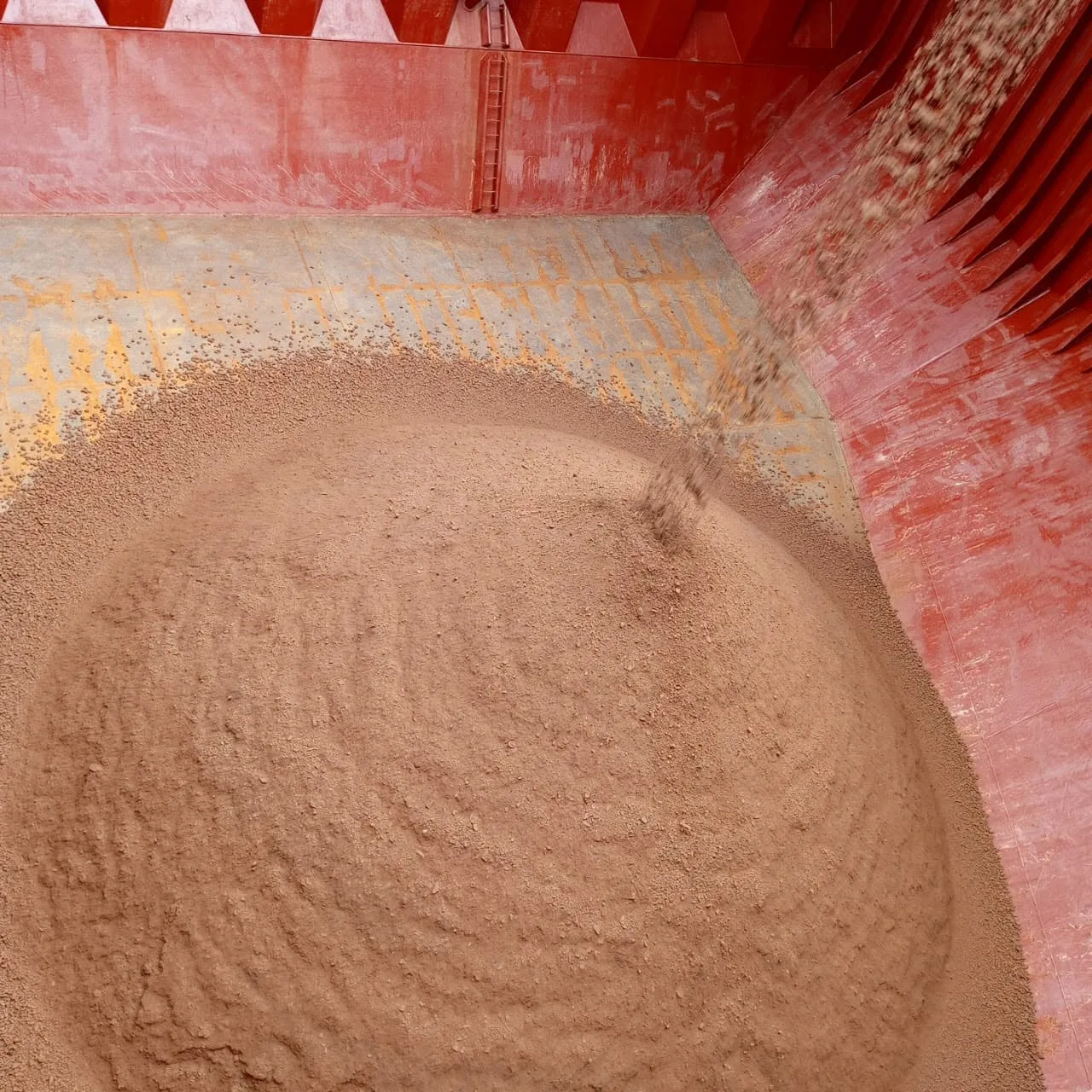
Cargoes that may liquefy are among the most serious risks in bulk shipping. Here is what shippers should know before loading.
Certain solid bulk cargoes, including some iron ore fines, can behave like a liquid when their moisture content is too high and they are subjected to the motion of a ship at sea. This phenomenon, known as liquefaction, can shift cargo and compromise a vessel's stability.
The IMSBC Code requires shippers to declare the moisture content and Transportable Moisture Limit (TML) of cargoes that may liquefy. Moisture content must be below the TML at the time of loading.
Independent pre-loading moisture surveys give shippers and vessel operators an additional layer of confidence. Surveyors observe stockpiles, collect representative samples and report on cargo condition before loading begins.